Free Quotes from Vetted Local Installers
Answer three short questions and get matched with one vetted local installer for a free, no obligation quote.
What Happens Next
Fill in a form about battery storage almost anywhere else and your phone rings for a fortnight, with companies you have never heard of all working from the same set of details.
Your enquiry goes to one vetted installer covering your Leeds postcode. One company, contacting you once, to arrange a free quote. Your details are not sold on.
Solar Panels Leeds is an introduction service. The installation contract, if you decide to go ahead, is between you and the installer.

The Return
A battery does not generate anything. It changes when you use what your panels already make. That is the whole of it, and it is worth putting a number on before you go any further.
Around half of what a 4.5 kW system generates gets used in the house. The rest is sold to the grid at a much lower rate.
Storing the surplus lifts self-use to around three quarters, so more of it replaces electricity you would have bought.
956 kWh moved from export to use. Each of those units is worth 15.52p more kept than sold.
Now the part most battery pages leave out. Against a 5 kWh battery at around £4,600, £148 a year does not pay for itself inside the ten to twelve years a battery lasts. Energy Saving Trust says as much directly: the savings can be significant, but will not always be enough on their own to justify the cost.
So if shifting solar were the only reason to fit one, the honest answer for most homes would be no.
It is not the only reason, and the next section deals with the one that genuinely changes the arithmetic.
Based on a 4.5 kW system generating around 3,825 kWh a year after real world derating. Import at 26.32p and export at 10.8p, the same rates used across this site. Self-consumption assumed at 50% without a battery and 75% with one, which is a standard industry assumption rather than a measured figure for your home. Import rate from the Ofgem price cap for 1 October to 31 December 2026, which carries no VAT for that period. Battery costs and lifespan from Energy Saving Trust.
The Bigger Lever
The £148 above assumes the battery only ever stores your own solar. On a time-of-use tariff it does something considerably more valuable: it buys electricity when it is cheap and uses it when it is expensive. That works in January, when the panels are producing almost nothing.
Octopus Flux is the clearest example, built specifically for homes with solar and a battery. It splits every day into three price bands.
Top the battery up from the grid while rates are at their lowest.
Solar covers most of what the house needs through the middle of the day.
Discharge the battery and export to the grid at the best rate of the day.
You buy low and sell high, with the same battery, every day of the year. Flux needs solar panels, a home battery, a smart meter sending half-hourly readings, an export MPAN, and your MCS certificate before you can switch.
Flux is one option among several. Other suppliers run time-of-use tariffs too, and which suits you depends on when your household actually uses electricity. The point is simpler than the tariff comparison: a battery is the thing that makes any of them worth being on.
Flux rates vary by region and move with wholesale prices, so any national number would be invented. Check your own postcode on the supplier's rate checker and take the result to the installer.
Tariff structure and eligibility as published by Octopus Energy. Rates are regional and variable and are not reproduced here.
The Cost, 2026
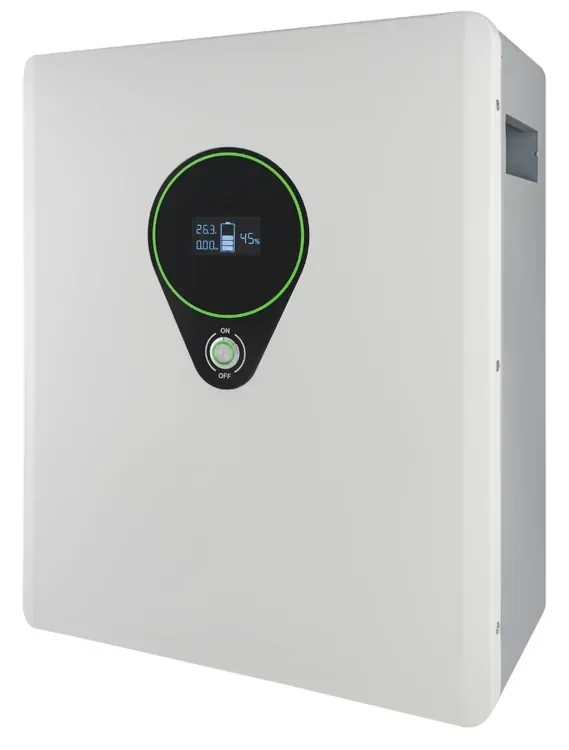
Battery storage runs from £1,500 to £10,000 installed. A 5 kWh system is around £4,600. A typical home system is 10 kWh.
Fitted at the same time as a new solar installation, the figure usually lands between £5,000 and £8,000, and it is cheaper that way because the scaffolding, the electrical work and the commissioning are all happening anyway.
Three things move the price. Capacity in kWh. Whether the existing inverter has to be replaced. And where the unit goes, which matters more in Leeds than in most cities, because a stone terrace with no garage is a different job from a semi with one.
Battery storage installation is zero rated until 31 March 2027. Standalone and retrofit batteries were brought into the relief on 1 February 2024, so it applies whether the battery goes in alongside panels or on its own.
There is nothing to claim and no paperwork. The installer applies it.
From 1 April 2027 the rate is set to return to 5%. On a £4,600 battery that is around £230.
Costs from Energy Saving Trust. VAT treatment from HMRC VAT Notice 708/6 and HMRC manual VENSAV3061.
Retrofit
If you already have panels, a battery can almost always be added. The real question is what has to change alongside it.
Two components matter. The battery, which is the storage itself. And the inverter, which converts what the panels produce into electricity the house can use, and decides moment by moment whether that goes to the house, the battery or the grid.
It was built to take storage. The battery connects to what is already on the wall and the job is straightforward.
There are two routes. Replace it with a hybrid unit, or fit an AC-coupled battery that has its own inverter built in. AC coupling leaves the existing setup untouched, which is often the faster route on a system that is working perfectly well.
Which applies to your house is not something a website can tell you. It comes off the model on the wall, and it is the first thing the installer will ask about.
When you enquire, say that you already have panels and roughly when they went in. It saves a phone call.
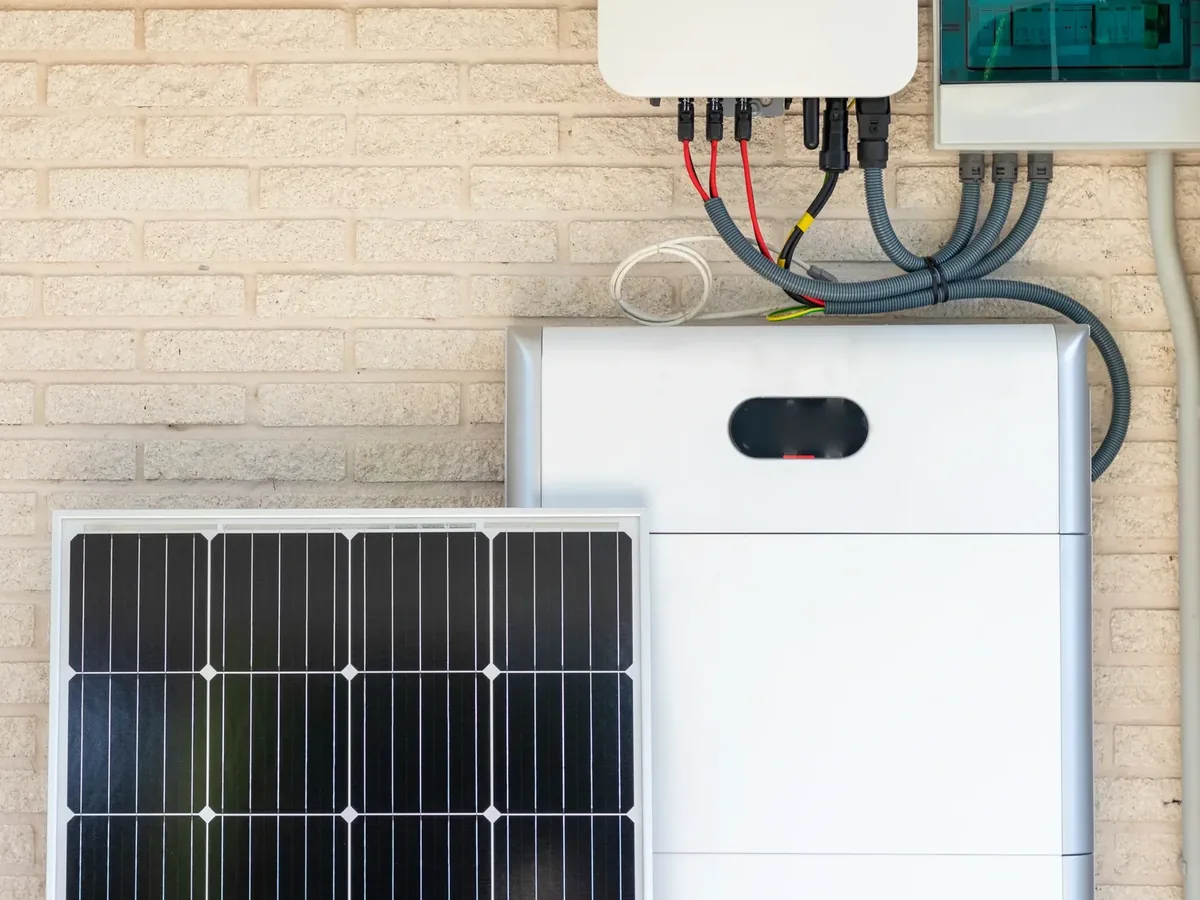
Stores what the panels make. Sized in kWh. Usually wall mounted in a garage, a utility room, a cellar or on an outside wall.
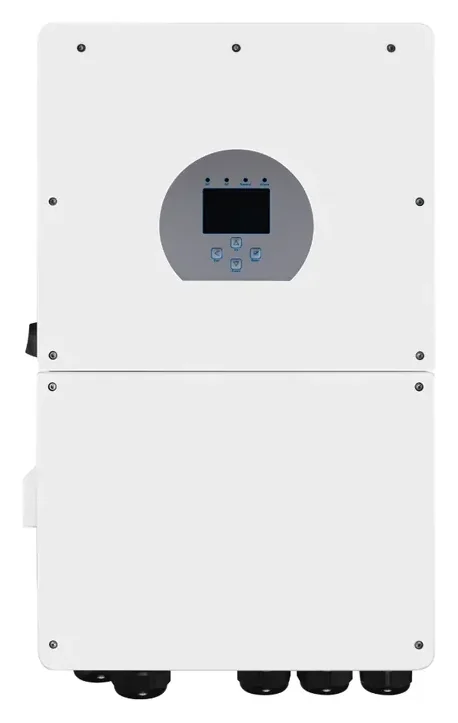
Converts and directs the electricity. A hybrid unit handles panels and battery together. A standard unit handles panels only.
New Installation
Fitting both at once costs less than fitting them a year apart, and not by a small margin. Scaffolding goes up once. The electrical work, the grid connection application and the commissioning happen once. One MCS certificate covers the whole installation.
It also removes the inverter question before it arises, because a hybrid unit goes in from the start and the system is sized as a single thing rather than retrofitted around a decision made years earlier.
The trade-off is the upfront figure. Panels alone on a typical Leeds semi come to around £7,400 for a 4.5 kW system. Adding storage brings the total to roughly £12,400 to £15,400, before the saving that comes from doing it all in one visit.
If the budget only stretches to panels this year, ask the installer to fit a hybrid inverter anyway. It costs a little more than a standard one, and it turns adding a battery later into a simple job rather than an expensive one.
Panel cost derived from DESNZ solar PV cost data for the 2025/26 financial year. Combined figure is the sum of that and the published battery range, not a quoted price.
Sizing
There is no formula. Capacity is matched to how much electricity you use in the evening, not to the size of your roof, and the installer works it out from your usage rather than from a chart.
That is the size most households end up with, though it varies with evening demand.
Roughly 100cm tall, 60cm wide and 25cm deep, so taller and wider than a washing machine but much shallower. It goes on a wall, not on the floor.
Systems stop discharging at around 20%, because draining a battery to zero shortens its life sharply. A 10 kWh battery gives you around 8 kWh of usable storage.
Typical battery lifespan is 10 to 12 years. Panels last considerably longer. Ask what the warranty covers and for how long before you commit.
Putting energy in and taking it back out loses a little along the way, so a stored unit is worth marginally less than one used as it is generated.
Oversizing is the more common mistake. A battery larger than your evening demand sits part empty most nights, and you have paid for capacity you never cycle.
Siting
A battery is a wall mounted unit roughly the size of a washing machine, and it has to live somewhere sensible: dry, ventilated, reachable for servicing, and not in the middle of a hallway.
Most solar advertising assumes a garage. A good deal of Leeds housing does not have one. Through terraces, back-to-backs and the inner suburb streets were built long before anyone needed somewhere to put an inverter.
In practice that leaves four options, and one of them usually works.
This is one of the first things the installer will look at, and it is worth having a view before they arrive. If you already know where you would want it, say so when you enquire.
The Basics
Panels charge the battery through the day. On a time-of-use tariff it can also charge from the grid overnight, when electricity is at its cheapest.
The electricity is held in the unit rather than being sold to the grid the moment it is produced.
When the house is drawing more than the panels are making, in the evening or overnight, the battery supplies it before the grid does.
When the battery is full and the panels are still generating, the surplus goes to the grid under the Smart Export Guarantee, exactly as it would without a battery. It simply happens less often.
Not every battery keeps the lights on when the grid goes down. Backup needs a unit that supports it and specific wiring to isolate your house from the network, and it is not standard on every system.
If that matters to you, say so when you enquire. It changes which systems are suitable and it is much cheaper to specify at the start than to add afterwards.
Who You Are Matched With
MCS certification is the thing to check. Without an MCS certificate you cannot register for the Smart Export Guarantee, so you are never paid for what you export. Most manufacturer warranties on batteries and inverters depend on certified installation. Octopus asks for the certificate before it will put you on Flux. And it is the document a buyer's solicitor asks for when you sell the house.
There is also a grid step people do not expect. A battery and its inverter have to be registered with the local network operator, which in Leeds is Northern Powergrid rather than National Grid. Depending on the size of the system that is either a notification after the work or an application before it. The installer handles it either way, but it is part of why a certified company matters.
On brands. The installer works across the major UK battery manufacturers rather than pushing one, and recommends on your usage and what is actually available at the time. Availability moves month to month, so the specification comes from your quote rather than from a list on a website.
Around 60 seconds. No account, nothing to upload, no survey to book.
Your details go to a single vetted installer covering your postcode.
The installer contacts you with a free quote, usually within one working day.
Before You Enquire
In most cases yes. If a hybrid inverter was fitted originally the battery connects to it directly. If not, either the inverter is replaced with a hybrid unit or an AC-coupled battery with its own built-in inverter is fitted instead. The installer confirms which applies from your existing equipment.
No. A battery on its own works with a time-of-use tariff, charging overnight when electricity is cheapest and running the house through the expensive hours. Energy Saving Trust notes a battery saves more running a heat pump than it does simply exporting surplus solar. Note that Octopus Flux specifically does require panels, so a standalone battery means a different tariff.
On solar shifting alone, usually not. The figures further up this page put the difference at around £148 a year against a battery costing around £4,600 and lasting ten to twelve years. The case improves considerably on a time-of-use tariff, where the battery is buying cheap and using or exporting at peak every day of the year. Whether it works for your household depends on your usage and your tariff, which is what the installer works through with you.
Typically 10 to 12 years, which is shorter than the panels, so it will need replacing before they do. Ask what the warranty covers and for how long before you commit.
Not automatically. Backup requires a battery that supports it plus specific wiring, and it is not standard. Mention it when you enquire if it matters, because it changes which systems suit you.
Around 100cm by 60cm by 25cm, so taller and wider than a washing machine but much shallower. Cellars, utility rooms and external walls are all common in Leeds, and garages where there is one.
No. Installation is zero rated until 31 March 2027, covering standalone and retrofit batteries as well as those fitted with panels. Nothing to claim, the installer applies it. The rate is currently set to return to 5% from 1 April 2027.
Yes, and the installer arranges it. Battery systems are registered with the local distribution network operator, which for Leeds is Northern Powergrid. Smaller systems are notified after installation, larger ones need approval first.
Yes. There is no charge for the quote and no obligation to proceed after receiving it.
Most enquiries are contacted within one working day.
They are passed to one local installer so they can prepare your quote. ReachAI Ltd is registered with the Information Commissioner's Office under reference ZB828222. Full detail is in the privacy policy.
Around 60 seconds to complete. No cost, no obligation, and only one local installer will contact you.
Start My Free Quote